what your clothes are made out of matters
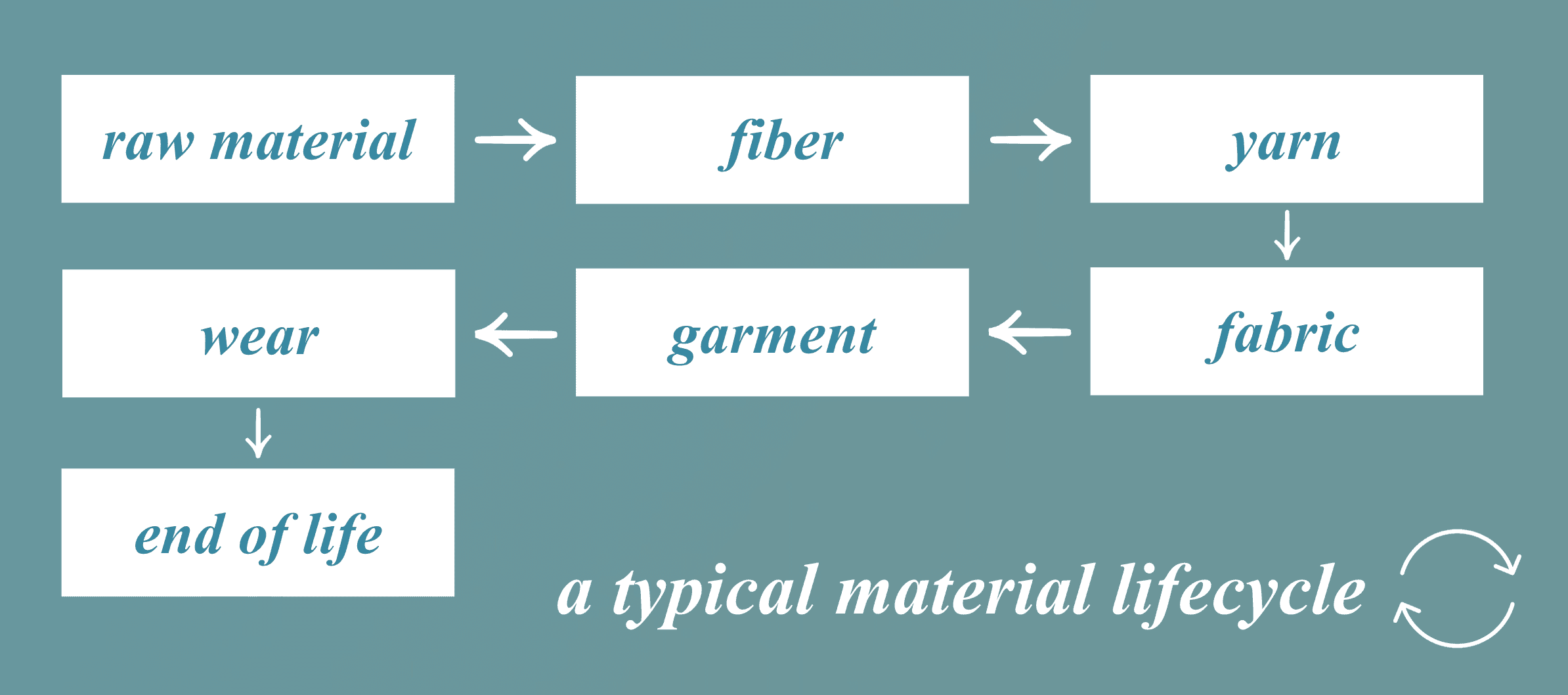
The fiber in clothing can influence how it feels, how it performs, how it's cared for, how long the piece lasts, and what happens to it at the end of its life.
every fiber has tradeoffs
Cotton, linen, wool, polyester, nylon, viscose, and recycled fibers all come with different benefits and environmental considerations. None of them are perfect, but knowing more about them makes it easier to shop with intention.
looking beyond the label
A fiber label won't tell you that most synthetic fabric is plastic in a woven form, or that washing it sends that plastic straight into the water supply. A single laundry load of polyester clothes can release up to 700,000 microplastic fibers. Washing one polyester shirt every couple of weeks can release roughly 52,000 fibers a year. Zooming out, synthetic textiles are responsible for an estimated 35% of the microplastics in our oceans today.
If less plastic is what you're after, Cotina makes those pieces easier to find in the first place.
Source: European Parliament Research Service (2019); World Economic Forum, citing IUCN research

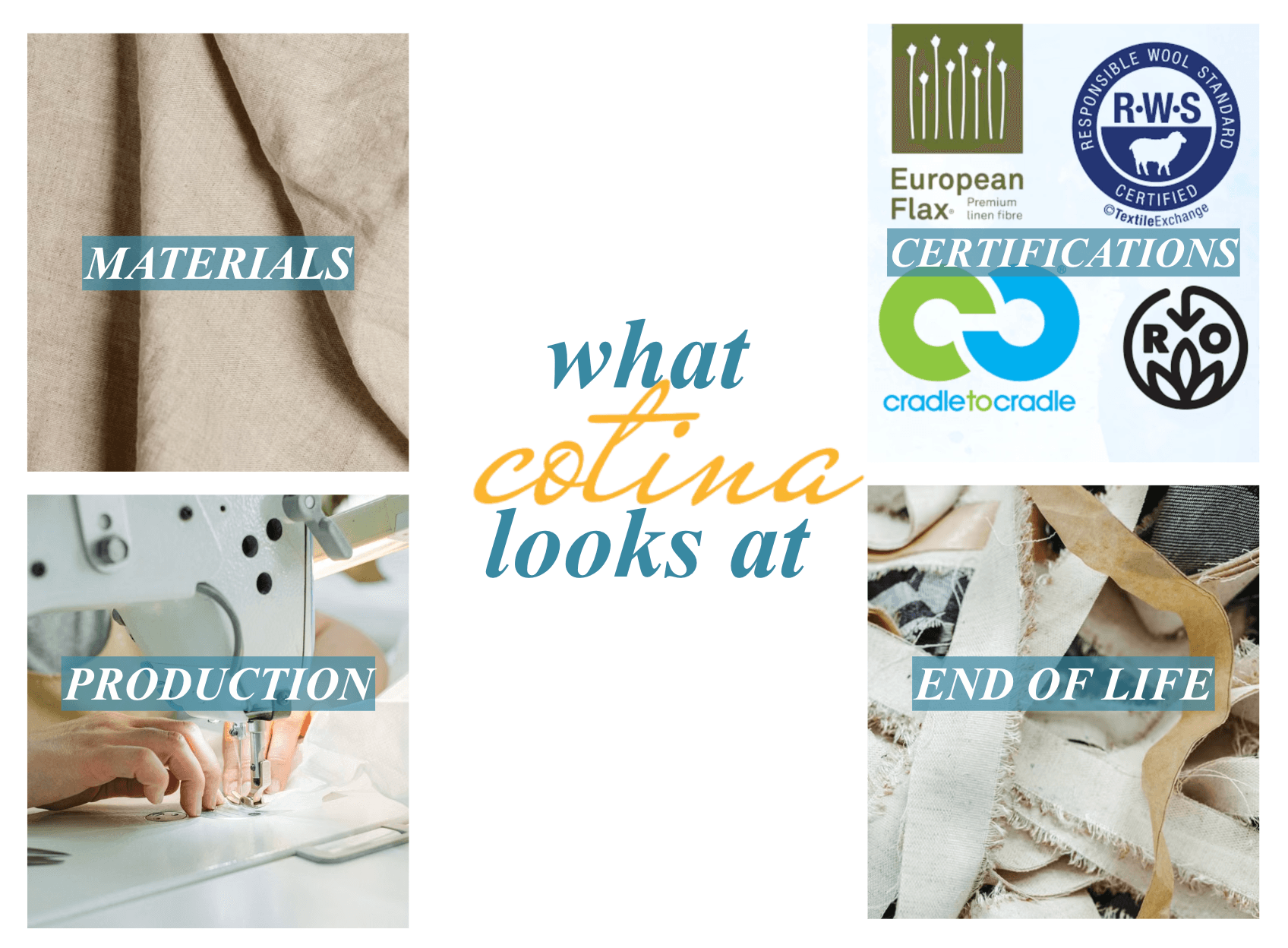

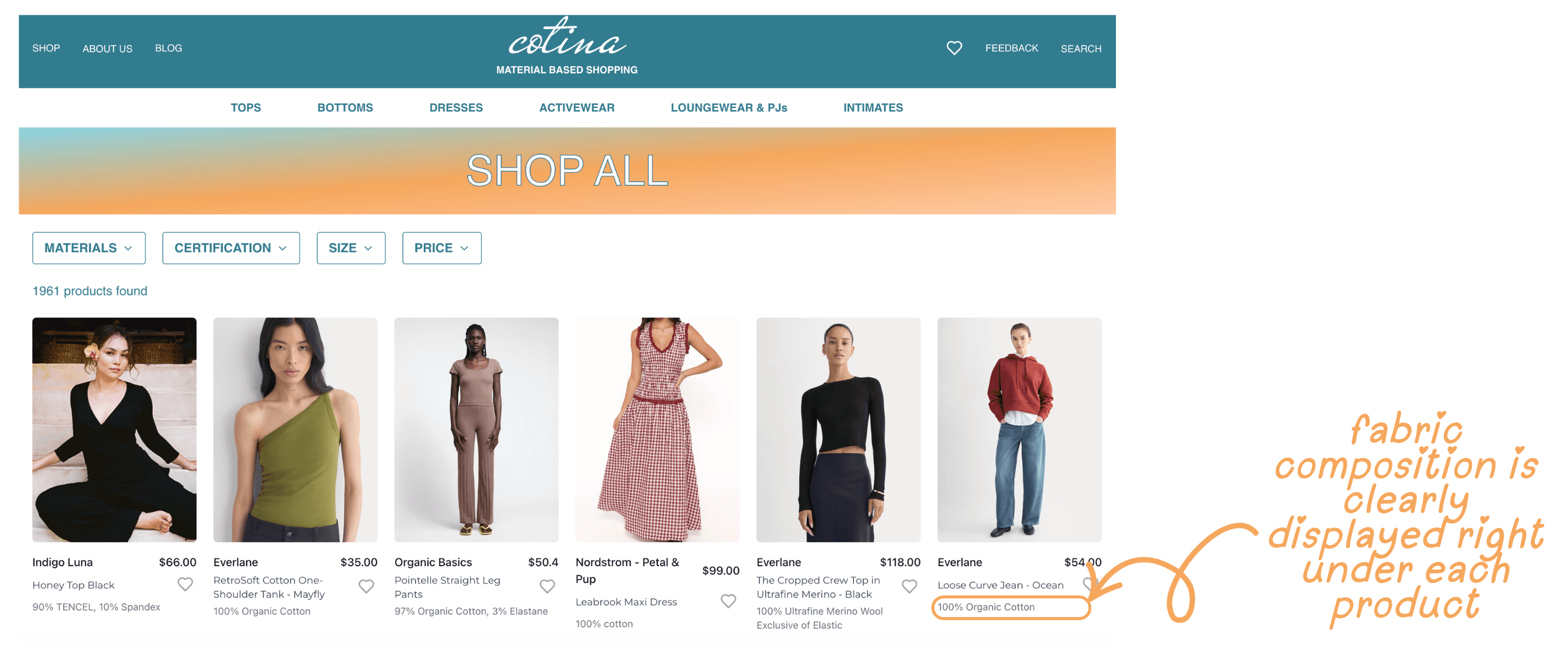
1. Discover pieces with less plastic from your favorite brands
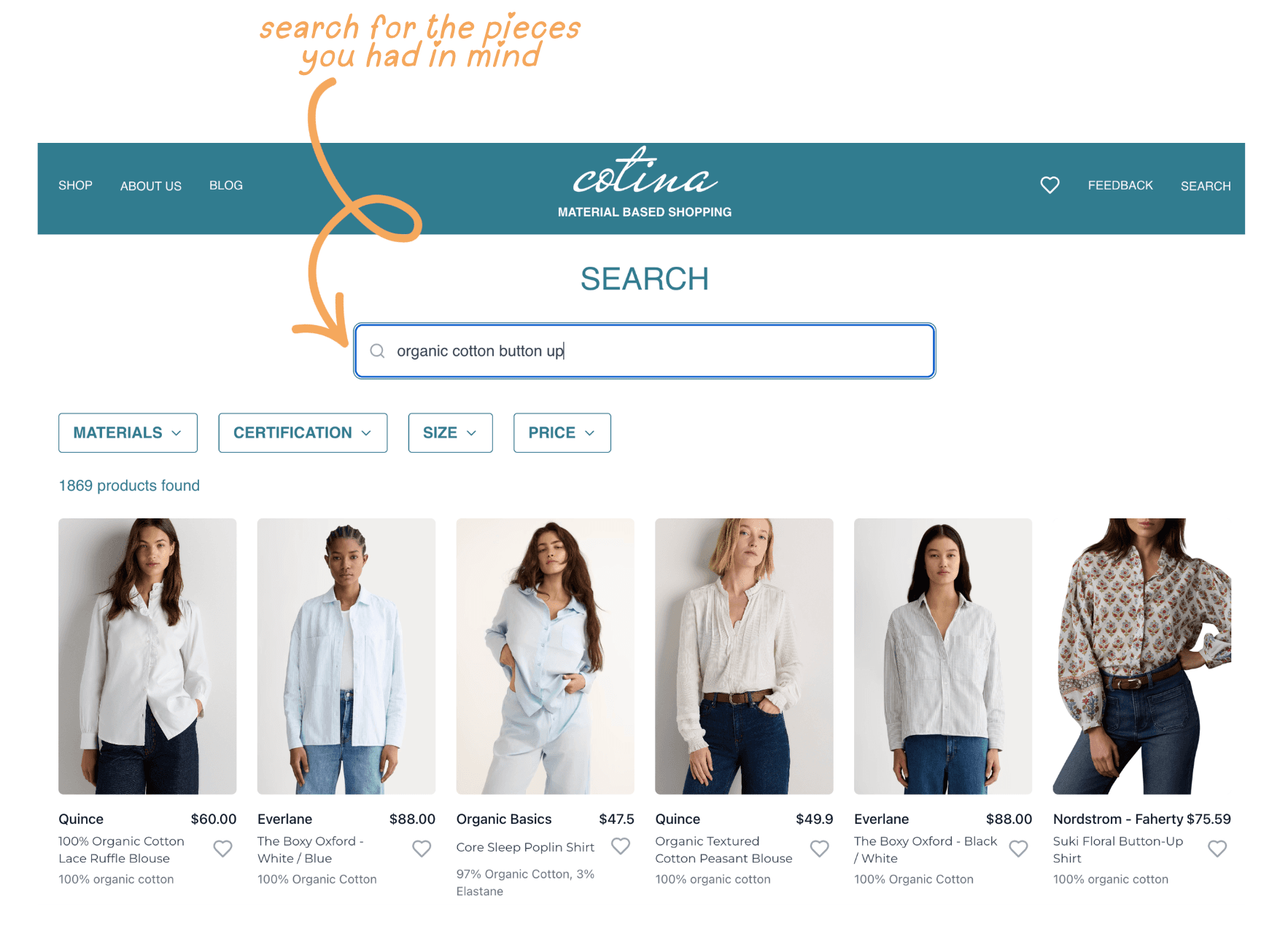
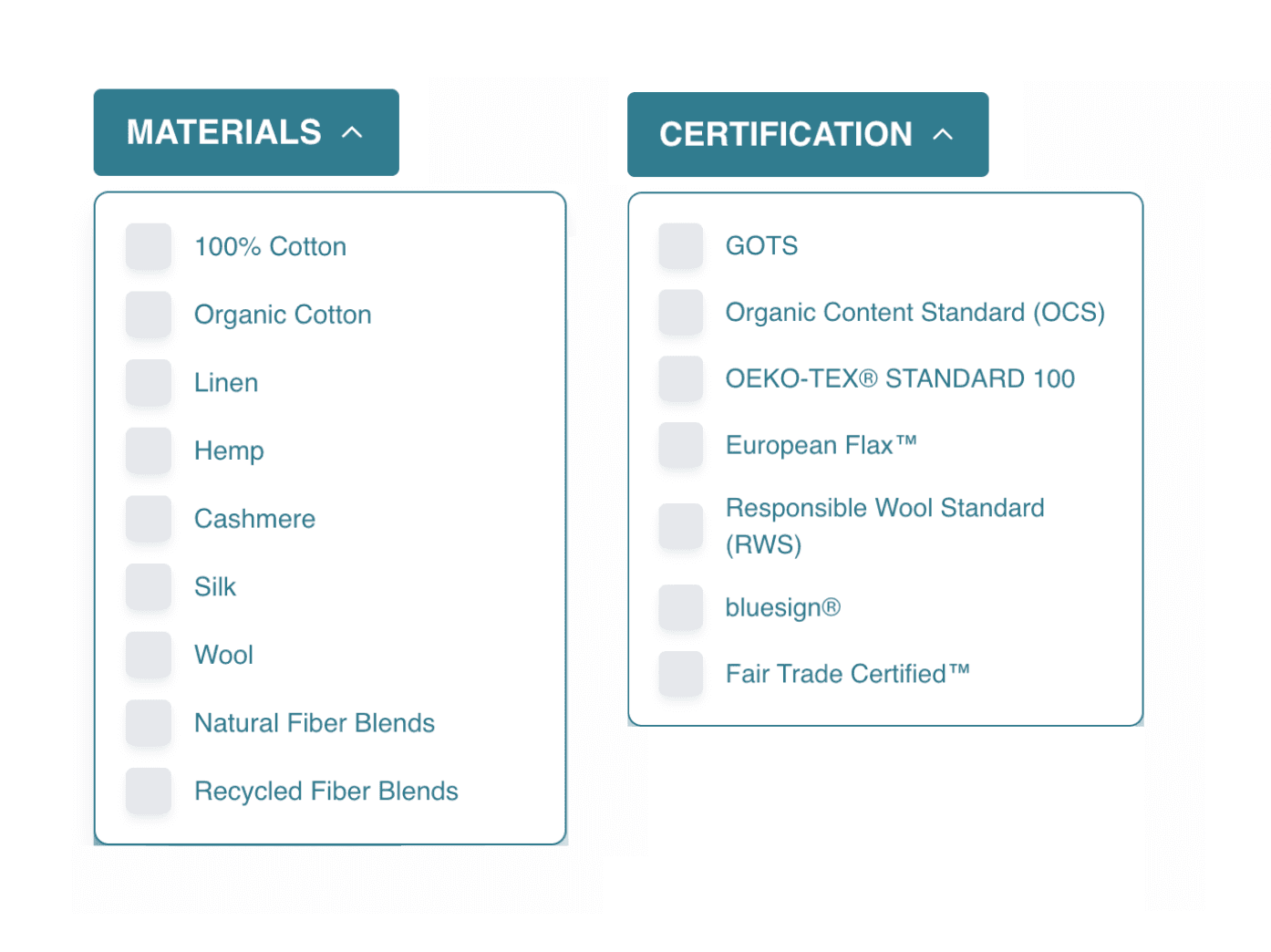
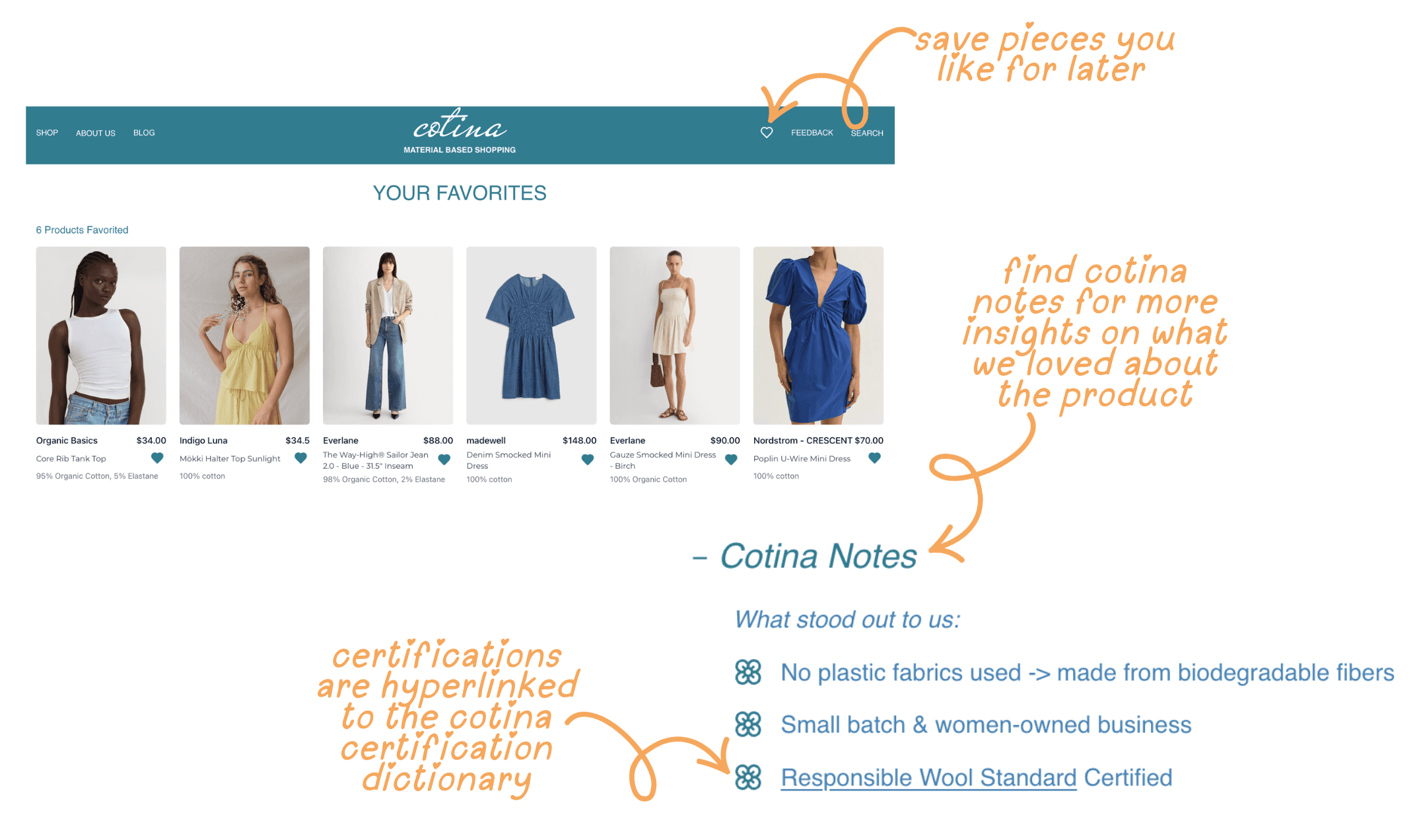
2. Filter pieces based on material, certifications, sizes, & pricing on each page
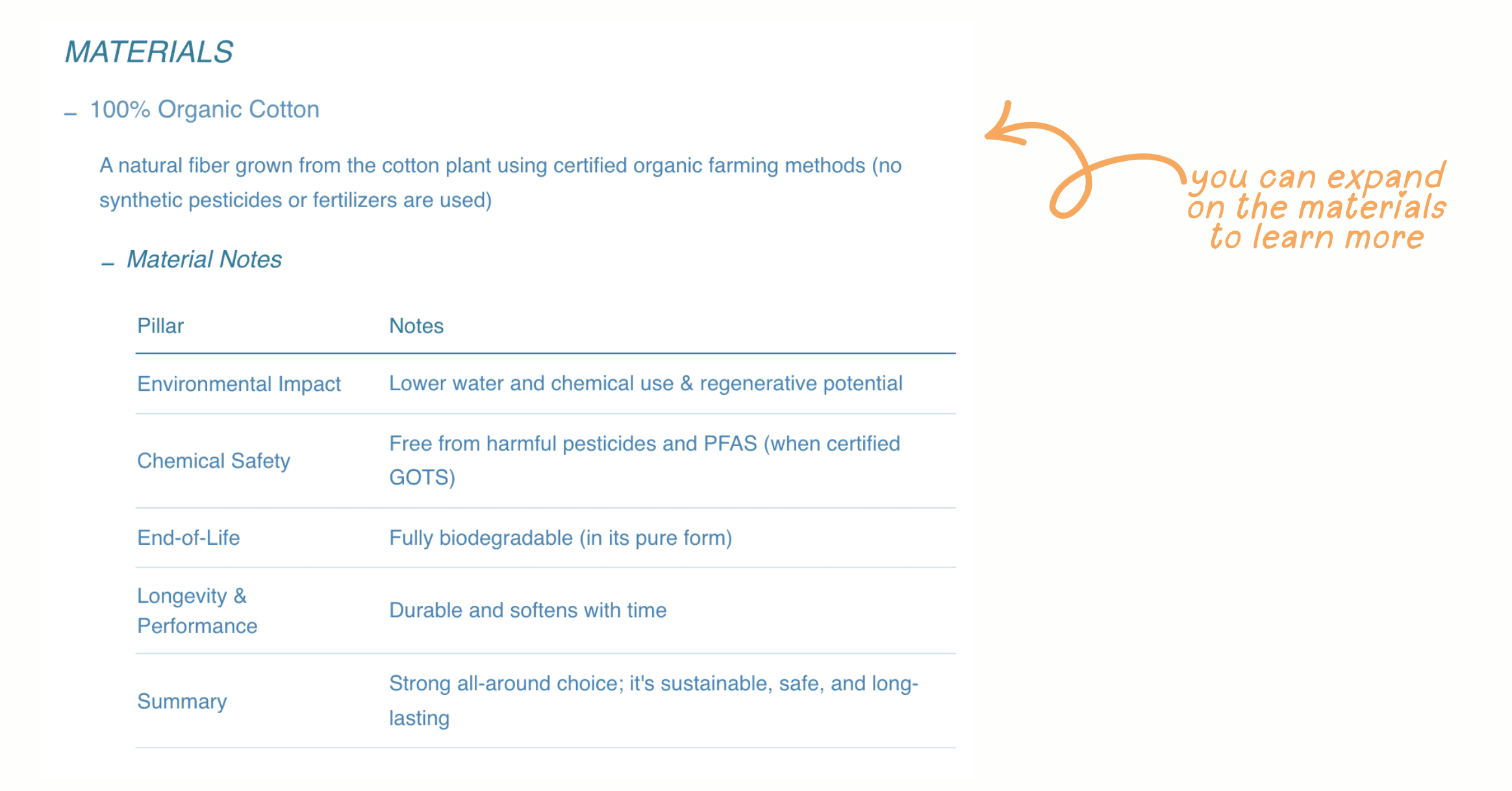
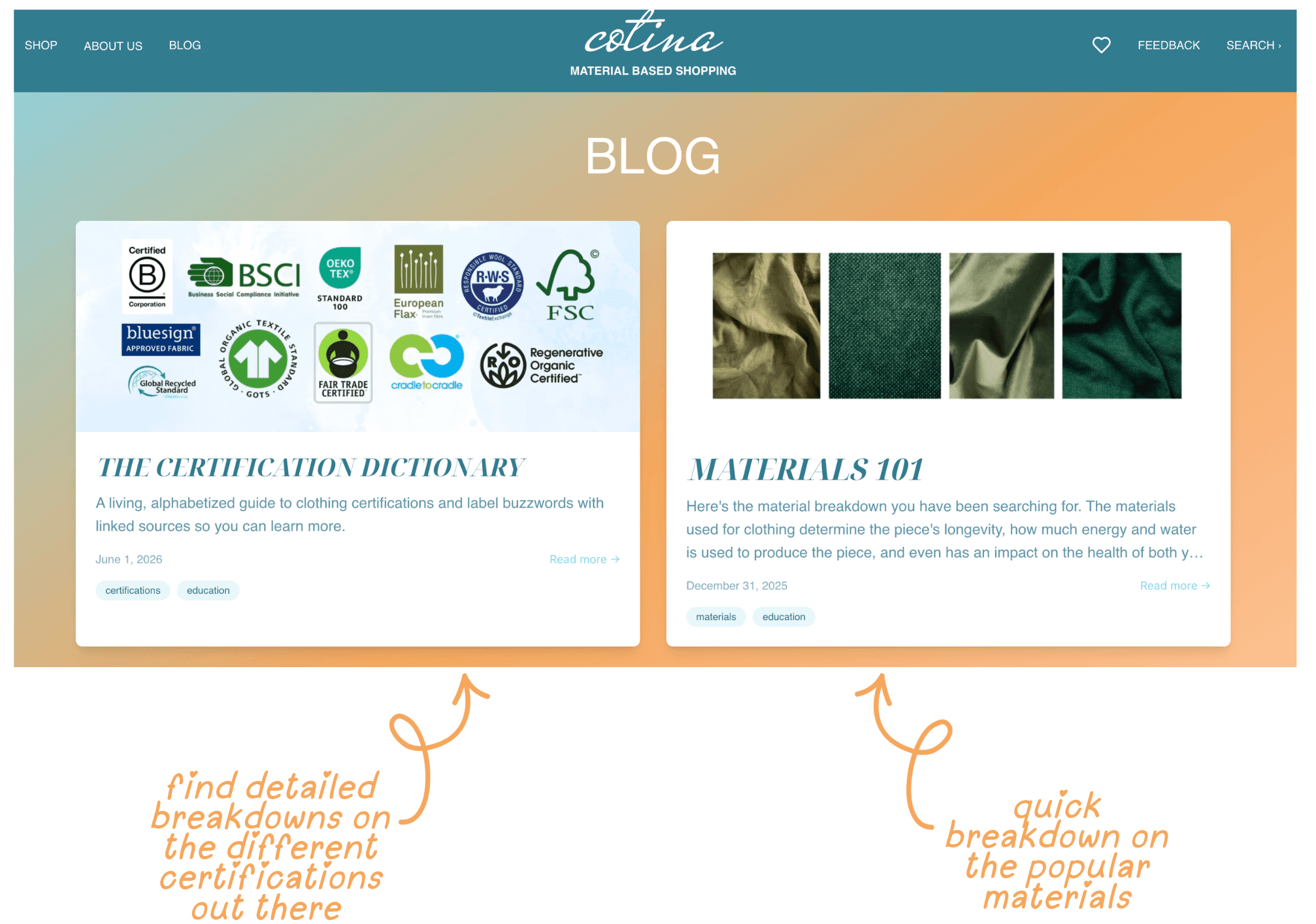
3. Learn more about the materials & certifications you are curious about
4. Make intentional shopping decisions

We know that simply buying clothes made from recycled or natural materials won't solve all the environmental issues tied to fashion.
Our hope is that by making it easier to shop by materials, we can encourage people to choose pieces that last longer & rely on less virgin materials.
We also believe that if demand grows for clothing with less plastic, more traceability, and certifications, more brands will be encouraged to have better production practices.
The last thing we want to do is contribute to greenwashing → we're simply trying to play a small part in shifting consumer choices & brand production habits.